Thermador repair
Thermador wall ovens running cool or locked shut, Mandarin
Ovens that will not hold a set temperature, doors that will not unlock after a clean cycle, and control boards that quit after a storm.
A wall oven that misses its set point by enough to matter usually announces itself at a specific job: the cake that used to take fifty minutes now takes seventy, or the roast browns on one side. That is a measurable fault, and it is worth measuring before anything is replaced.
What we check first
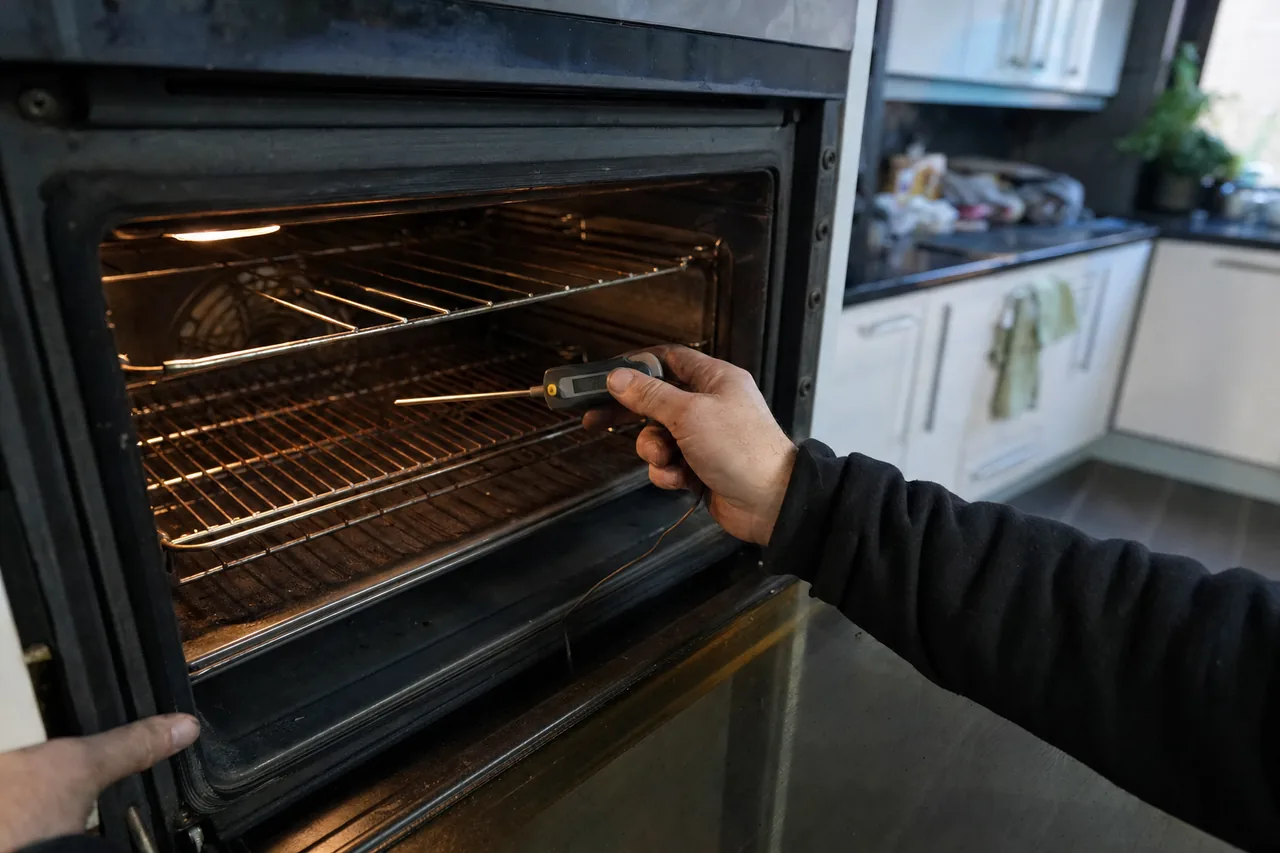
We put an independent probe on the centre rack and watch a full heat cycle rather than trusting the display. Three things separate quickly that way: a sensor reading high, an element that has lost part of its length, and a control that is calling for heat correctly but not getting it. Each one has a different part and a very different price, and guessing between them is how people end up paying for two repairs.
Doors are the other common call. A door that will not release after a clean cycle is normally a latch motor or its switch, not the lock itself, and it is worth saying plainly that forcing the door is the one action that turns a modest repair into an expensive one.
Storms and control boards
Mandarin sits in a part of the country that sees roughly sixty-eight thunderstorm days a year. Line surges do not usually kill an oven outright. They tend to take out one function first, most often the display or the convection circuit, while everything else keeps working. If your oven changed behaviour on a stormy afternoon, say so when you call, because it narrows the diagnosis considerably.
Self-clean is harder on an oven than anything you cook
A self-clean cycle takes the cavity far above any cooking temperature and holds it there, and that is the most demanding hour an oven ever has. Most of the post-clean failures we attend are not coincidences. Heat that intense finds the weakest component and finishes it, which is usually the door latch motor, the thermal fuse, or a wiring connector near the top of the cavity that had already been through several hundred cycles.
None of that means the cycle should never be used. It means it is worth running it when you have time to be in the house, with the kitchen ventilated and nothing scheduled for the oven the following day. If you have a large meal coming, clean the oven a fortnight beforehand rather than the night before.
A door that will not release afterwards is the common aftermath, and it is almost always the latch mechanism rather than the control that has decided the oven is still hot. Forcing it is the one action that turns a modest repair into an expensive one, because the latch arm will bend and then the door itself needs realigning.
Double ovens
On a double wall oven, the two cavities often share a single control while keeping separate elements and separate sensors. That produces a diagnosis worth doing carefully. If the upper cavity heats correctly and the lower does not, the shared control is unlikely to be at fault and the problem is in that cavity’s own circuit. If both cavities have gone at once, the control or its power supply moves to the top of the list.
We run both cavities through a full cycle for exactly this reason, even when the complaint only mentions one of them. It takes an extra twenty minutes and it regularly changes the estimate.
Older Mandarin kitchens
Much of the housing here went up between the 1970s and the 1990s, before the built-in column era, so wall oven cutouts were sized for whatever was on the market at the time. A replacement that is nominally the same width can still foul a face frame by half an inch. When we quote a repair on an older installation we check the opening as well as the appliance, so that a decision to repair or replace is made with the cabinetry in front of us.
Symptoms we see on this one
- Oven not heating at all, or heating but never reaching the set point
- Oven runs cool or overshoots the set temperature
- Door stays locked after a self-clean cycle
- Display is dark but the cooktop above still works
- Convection fan runs constantly or not at all
- Bake element glows on one end only
Call (904) 201-3304
Before the estimate
What does a wall-oven repair cost here?
The visit is a flat $80 and it comes off the repair once you approve it. What the repair itself lands at depends on the part, and these are the bands the work below has actually fallen into. A band is not a quote: the firm figure is written down after the appliance has been opened and measured.
| Repair | Typical range |
|---|---|
| Diagnostic visit | $80 flat, credited |
| Oven thermostat or temperature sensor | $170–$560 |
| Control board or touch panel | $430–$1,100 |
| Bake or broil element | $200–$570 |
| Door hinge, glass or seal | $200–$650 |
Asked on this appliance
What do owners ask about a wall-oven?
- The oven runs cool. Is it the sensor or the element?
- An independent probe goes on the centre rack and we watch a full heat cycle rather than trusting the display. That separates a sensor reading high, a bake element that has lost part of its length, and a control calling for heat correctly but not getting it.
- The door is still locked after a self-clean cycle. What now?
- Self-clean is the hardest hour an oven ever has, and the lock motor, the thermal cut-out and the control are the three that feel it. Leave the appliance to cool fully first. If the latch has not released after that, it is a repair rather than a wait.
- The oven is not heating. What does that cost to fix?
- It depends which of three things is at fault, and they price apart: an oven thermostat or temperature sensor at $170–$560, a bake or broil element at $200–$570, a control board at $430–$1,100. A probe on the centre rack through a full cycle is what separates them.
- The display is dark but the cooktop above still works.
- They are separate appliances sharing a wall, so that is expected rather than reassuring. A dark oven panel after a storm usually means the supply, the harness or one board, and we measure the supply and the connectors at both ends before the board is quoted.
After a wall-oven visit in Mandarin
Rated 4.8 out of 5 across 62 customer reviews. Read all 62.
The door stayed locked for two days after a self-clean. Rather than forcing it he wound the latch motor round on the bench connector and freed it undamaged, then replaced the thermal switch that had caused the hang.
Bartholomew L.August 2026
The convection fan ran nonstop even with the oven off. A relay had welded closed. He showed me the contacts once the board was out so I could see why it would never release, and the new board settled that.
Ferdinand H.June 2026
Broil worked and bake did not. He had the element out and measured before he would quote anything, and the reading came back open circuit. Fitted the same afternoon, and the oven has held steady since.
Ignacio B.June 2026
The line we work to
Where the work stops
We work on the built-in appliances inside the kitchen and nothing else. The only duct we open is the one above the cooking surface, from the hood to the wall cap outside — the supply and return ducts that heat and cool the house are a different trade altogether and we are not in it. If the call is about a furnace, an air conditioner, an air handler or a vent in the ceiling, we will say so on the phone and send you elsewhere rather than book a visit.
A call from Mandarin about a Thermador appliance is ours. A call from Mandarin about the furnace, the air conditioning or a vent in the ceiling is not, and we would rather tell you that in thirty seconds on (904) 201-3304 than on your doorstep.
We service
- Built-in refrigeration
- Wall ovens and steam ovens
- Ranges and rangetops
- Cooktops and induction
- Ventilation hoods
- Dishwashers
- Warming drawers
- Built-in coffee machines
- Wine columns
We do not service
- Furnaces and central heating
- Air conditioners, air handlers and heat pumps
- Supply and return ducts, ceiling vents and registers
- Thermostats and whole-house humidity control
- Water heaters and house plumbing